Oolong Tea Food Pairing: Match Roast to Plate
- Pair oolong by weight: light, floral teas with delicate food, deeper roasts with richer dishes.
- Four Seasons Si Ji Chun's bright gardenia aroma suits fresh fruit, salads, seafood and lightly steamed dishes.
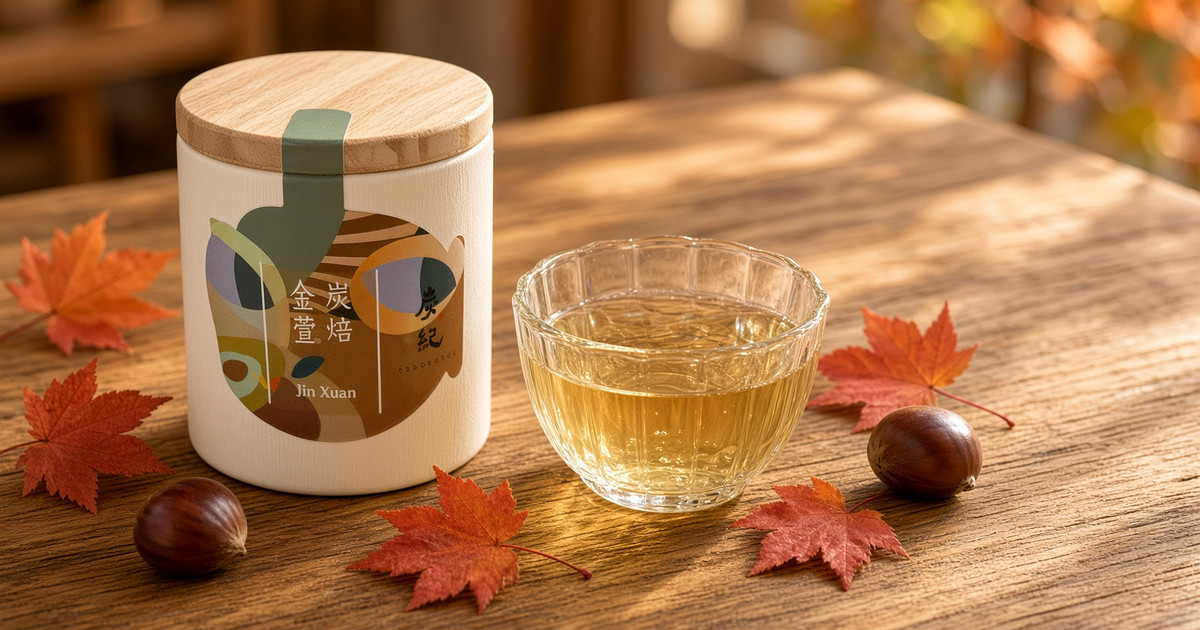
- Milky, softly floral Jin Xuan flatters butter pastry, custard, rice crackers and mild cheese.
- Red oolong, with black-tea fragrance and oolong sweetness, is a natural match for berries, cake and chocolate.
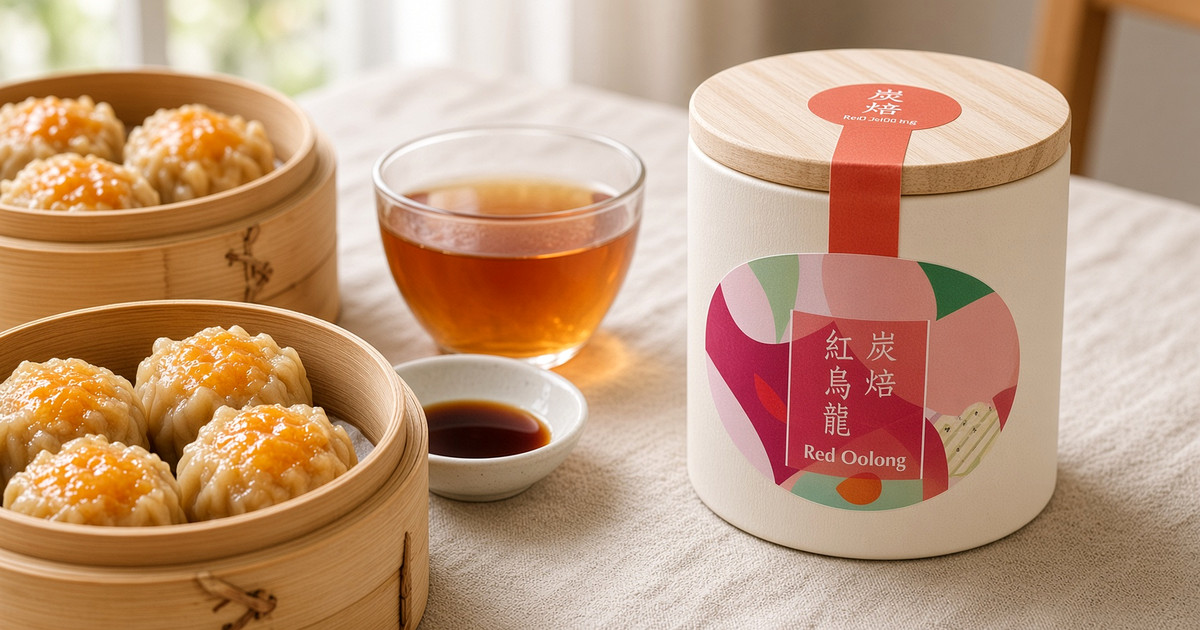
- Deep charcoal-roasted Oolong, rich in roasted aroma and long in the finish, stands up to dim sum, grilled meat and savoury snacks.
The easiest way to pair oolong tea with food is to match weight: light, floral oolongs with delicate dishes, and deeper, roasted oolongs with richer food. Get that right and the tea will refresh your palate between bites instead of competing with the plate.
Taiwanese oolong covers a wide range, from bright and floral to dark and roasted, which makes it one of the most food-friendly teas you can buy. This guide uses TEAGRAPHY's four Four Seasons Tea Gathering oolongs as reference points, because each sits at a different place on that range.
Quick answer: which oolong with which food?
- Si Ji Chun (bright, gardenia aroma): fruit, salads, seafood, steamed vegetables.
- Jin Xuan (milky sweetness, soft floral note): butter pastry, custard, rice crackers, mild cheese.
- Red Oolong (black-tea fragrance, mellow sweetness): berries, fruit tarts, sponge cake, chocolate.
- Oolong (rich roasted aroma, long finish): dim sum, grilled meat, roasted nuts, aged cheese.
The flavour notes above come from TEAGRAPHY's product pages. The pairings are starting points; your own palate decides.
Three rules for pairing tea with food
- Match intensity. A delicate tea disappears next to a heavy sauce; a dark roast can flatten a light salad.
- Echo or contrast. Echo a tea's fruit note with fruit, or use a roasted tea to cut through something rich and fatty.
- Keep the tea unsweetened. Oolong's natural sweetness and lingering finish do the work sugar would otherwise hide.
If you want to understand where charcoal roasting sits on that scale, start with What Does Charcoal-Roasted Oolong Taste Like?
Si Ji Chun with fresh, light food
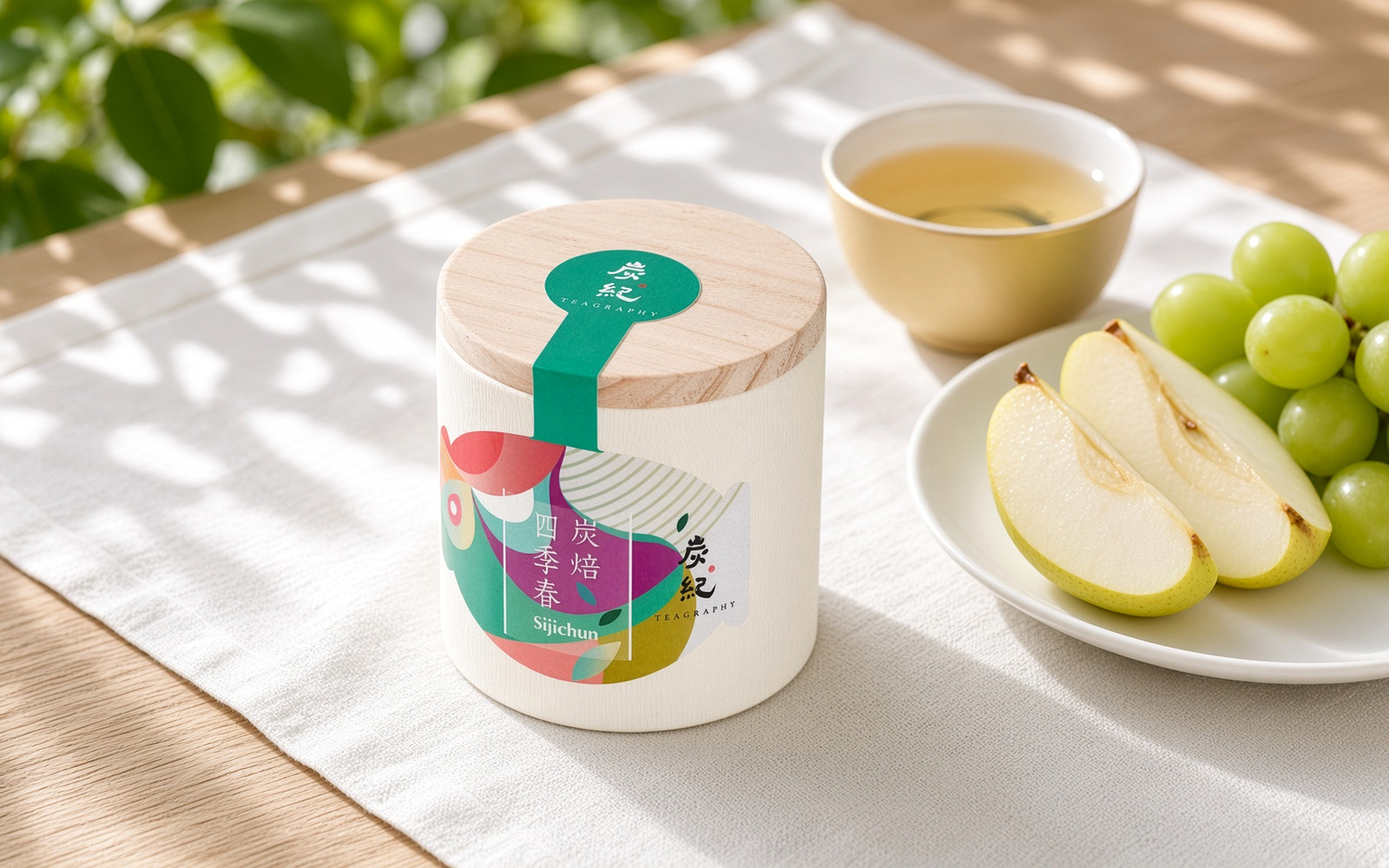
TEAGRAPHY describes its Charcoal-Roasted Si Ji Chun as having a bright, expansive gardenia aroma. That lift works best with food that has a fresh, clean edge.
- Sliced pear, melon or citrus.
- Green salads with a light dressing.
- Steamed fish, prawns or tofu.
- Cucumber sandwiches and other simple afternoon bites.
Keep the brew bright and avoid over-steeping, so the floral aroma stays in front. Learn more in Four Seasons Spring (Si Ji Chun) explained.
Jin Xuan with pastry and creamy textures
The Charcoal-Roasted Jin Xuan is described as full of milky sweetness with a soft floral note. Echo that creaminess rather than fighting it.
- Butter cookies, croissants and shortbread.
- Egg tarts and custard desserts.
- Rice crackers or lightly salted snacks.
- Mild, creamy cheese.
For more on why Jin Xuan tastes milky without any milk, read Jin Xuan (Milk Oolong) Explained.
Red Oolong with fruit and dessert
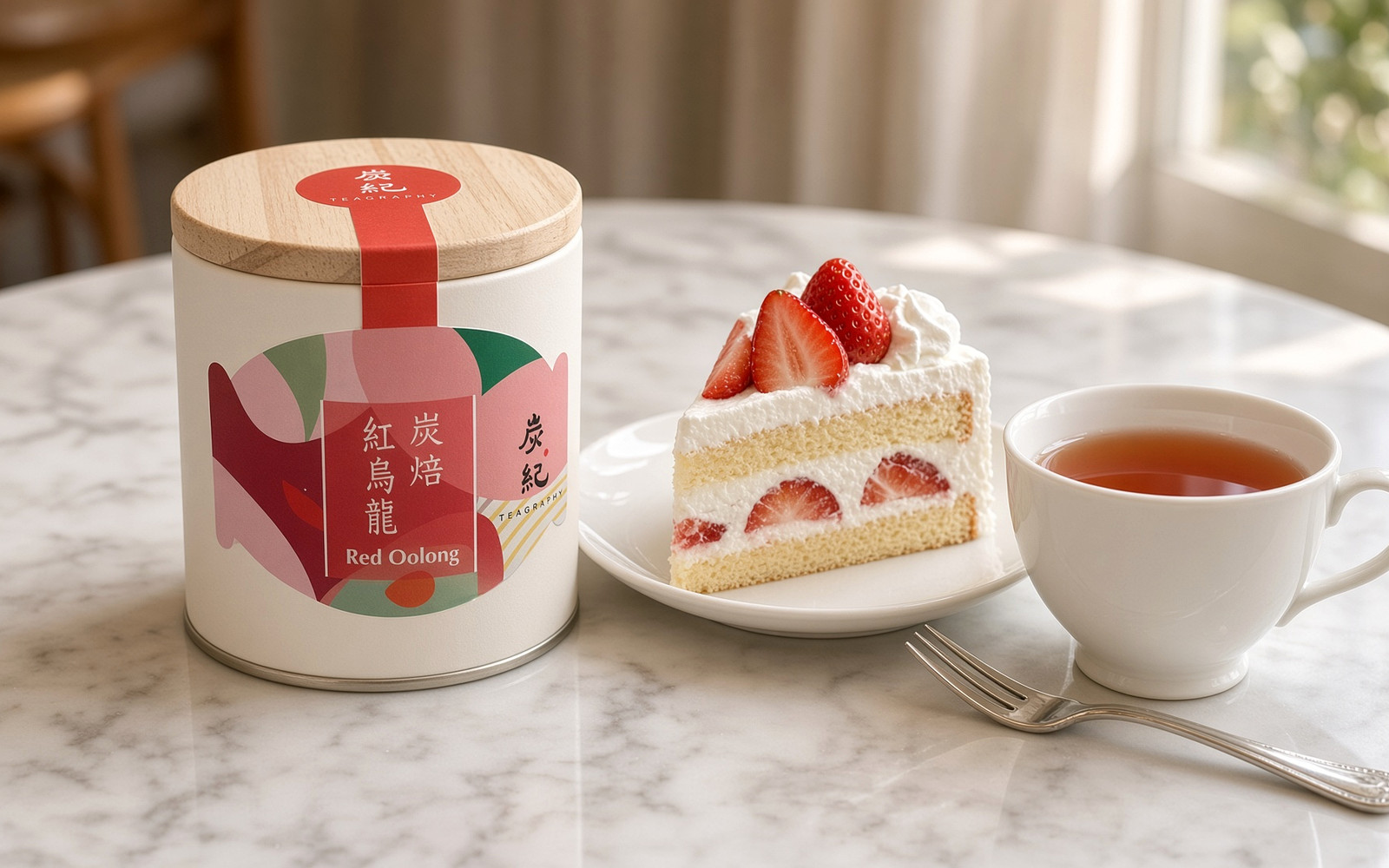
The Charcoal-Roasted Red Oolong combines the fragrance of black tea with the mellow sweetness of oolong. That makes it the most natural dessert tea of the four.
- Strawberries, cherries and berry tarts.
- Sponge cake, pound cake and castella.
- Dark or milk chocolate.
- Baked apple or fruit crumble.
Anyone who drinks black tea with cake will find this an easy switch. See our Red Oolong guide for more on the cup.
Deep-roasted Oolong with rich and savoury food
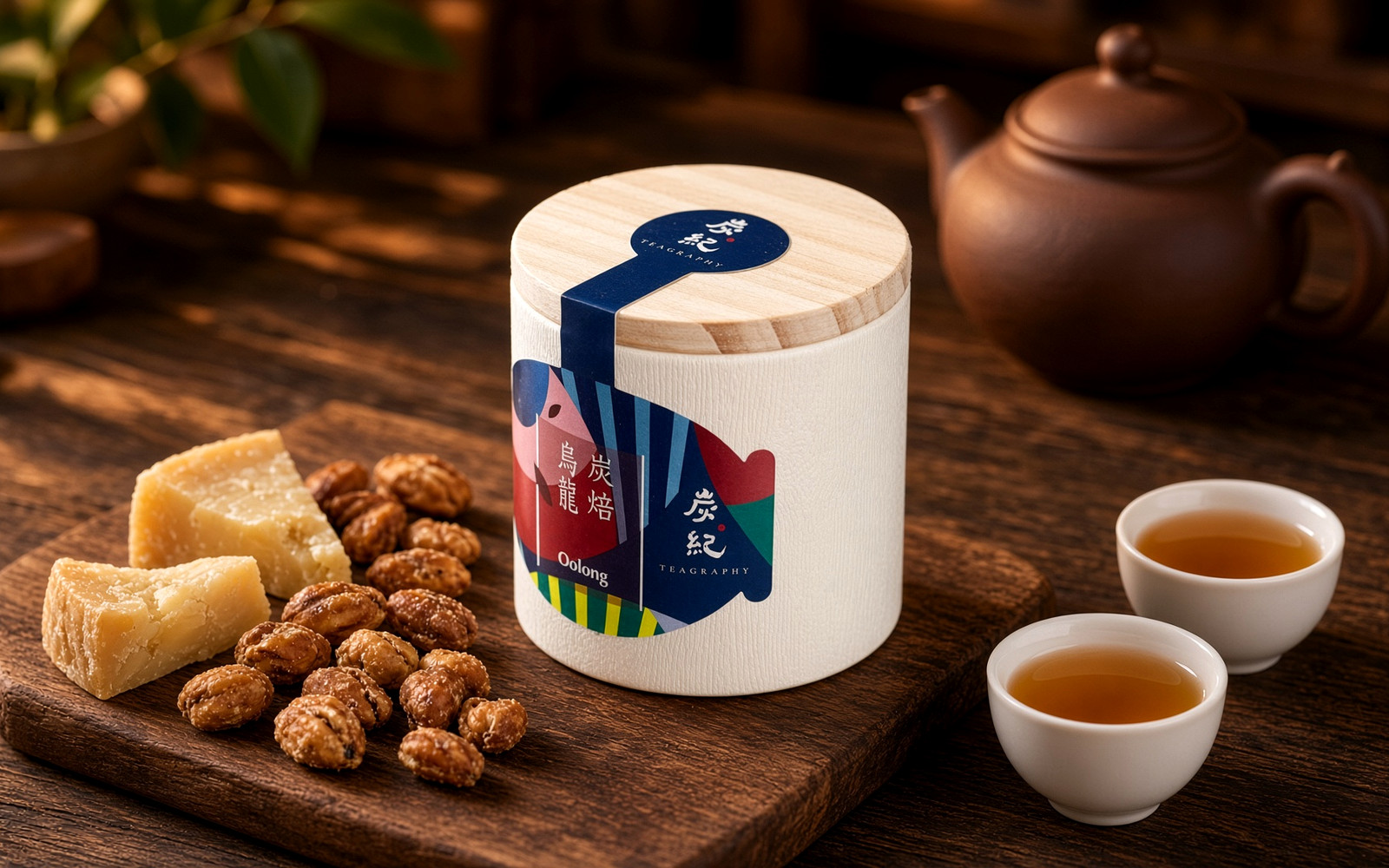
The Charcoal-Roasted Oolong is described as having a rich roasted aroma with an excellent finish. Its body and longan-charcoal warmth stand up to food with fat, salt and umami.
- Dim sum: dumplings, buns and fried spring rolls.
- Grilled meat, roast duck or yakitori.
- Roasted nuts and aged, nutty cheese.
- Braised dishes with soy and spice.
The roasted finish helps reset the palate after each rich bite, which makes it an easy tea to serve alongside a rich meal.
Brewing tea for the table
For a meal, brew a slightly lighter pot than you would drink on its own, so the tea refreshes rather than dominates. TEAGRAPHY recommends water at 95-100°C for its charcoal-roasted oolong. If the tea tastes too strong beside salty or sweet food, shorten the steep instead of lowering the temperature.
- For a group: brew one pot of a lighter tea and one of a deeper roast, then let people compare with each course.
- For dessert: switch to Red Oolong or a fresh pot of Jin Xuan.
- For re-steeping: later infusions are softer, which suits the end of a meal. See How to Brew Taiwanese Oolong.
Try all four in one tasting
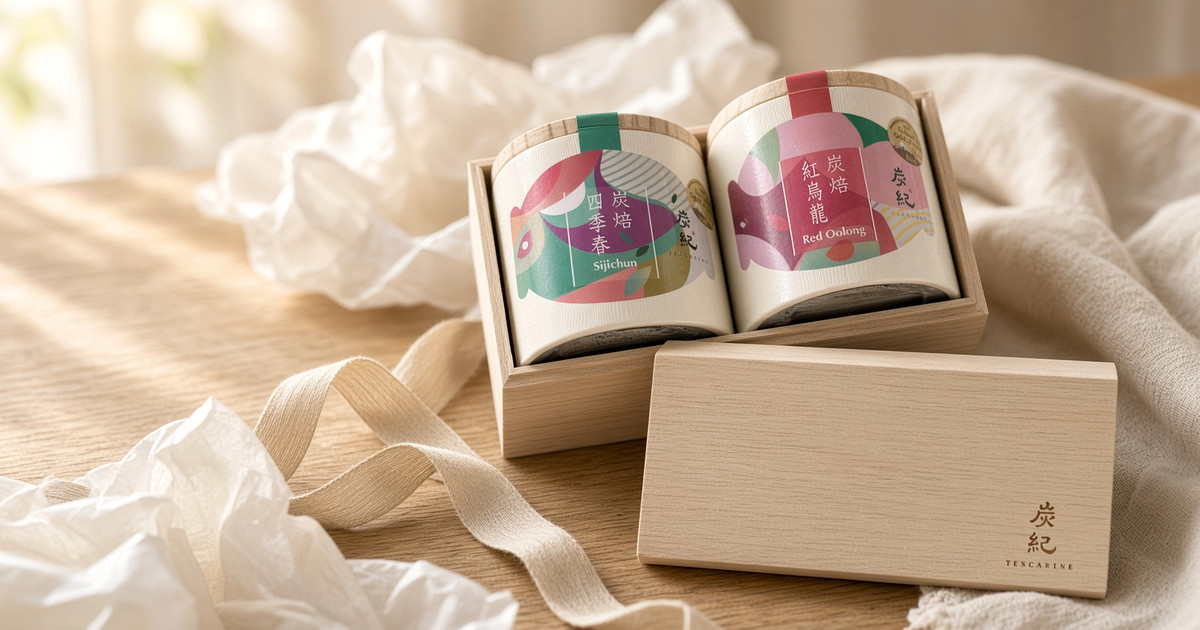
The simplest way to find your favourite pairing is to taste all four teas with the same small plate. The Four Seasons Tea Gathering Gift Box holds four 50 g cans, one of each flavour, with a gift bag. If you only want two, the Any Two Value Set lets you choose the pair.
Start light, finish deep: Si Ji Chun with fruit, Jin Xuan with pastry, Red Oolong with cake and Oolong with something savoury. Within one afternoon you will know which cup belongs at your table.
Shop the four teas: Si Ji Chun · Jin Xuan · Red Oolong · Oolong · Gift Box · All TEAGRAPHY teas